


Short answer: a freestanding, plug-and-play island usually doesn’t need a construction permit, but the work around it often does, and most HOAs want to approve it first. Here is how to sort it out before delivery day.
What usually needs a permit
- A new gas line for natural gas. This is plumbing work for a licensed gas contractor, who pulls any permit needed.
- A new outdoor outlet or circuit. Electrical work by a licensed electrician.
- A sink tied into your water supply and drain.
- A roof, pergola or slab built on site, or any structure attached to the house.
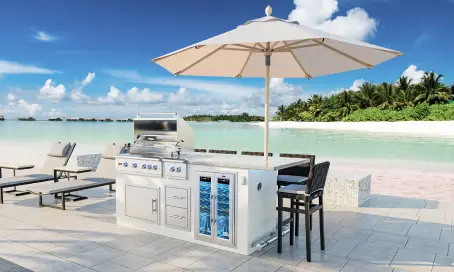
A Paradise Grills island arrives assembled and sits on your existing patio, so the island itself is usually treated like furniture or an appliance. Rules differ by city and county, so check with your local building department: City of Jacksonville (Duval), St. Johns County, Clay County or Nassau County.
Getting HOA approval
- Read your architectural guidelines for patios, grills and structures, and check whether gas or open flames are limited.
- Submit an application with a photo of the patio, the island’s size and finish, a product sheet, the fuel type and a drawing showing where it goes.
- Ask us for a free 3D design of your patio. It makes a clean exhibit for the committee.
- Get the approval in writing before you schedule delivery.
Townhomes, condos and covered lanais
If your patio is a common element, the association may control it outright. Some communities allow electric grills only. The ESL-24 electric grill is an option in that case. Under a covered lanai, follow the grill manufacturer’s clearance and covered-use guidance. See the small patio guide for the full checklist.
Bottom line: the island is usually the easy part; gas, electrical, plumbing and anything built on site are where permits come in. This guide is general information, not legal or code advice. Your local building department and your HOA have the final word.
Need paperwork for your HOA? Get a free 3D design and product sheet from us.